Healthcare Access and Digital Inequality in India
Building Inclusive, Connected, and Accountable Healthcare Systems
Research transparency: This report synthesises selected public evidence and develops recommendations. It does not present original patient research, an independently evaluated intervention, or a systematic review. References to potential applications of MedBuddy by Explicity Technologies describe proposed directions unless explicitly identified otherwise. They do not establish that particular features, integrations, certifications, or clinical outcomes have already been delivered.
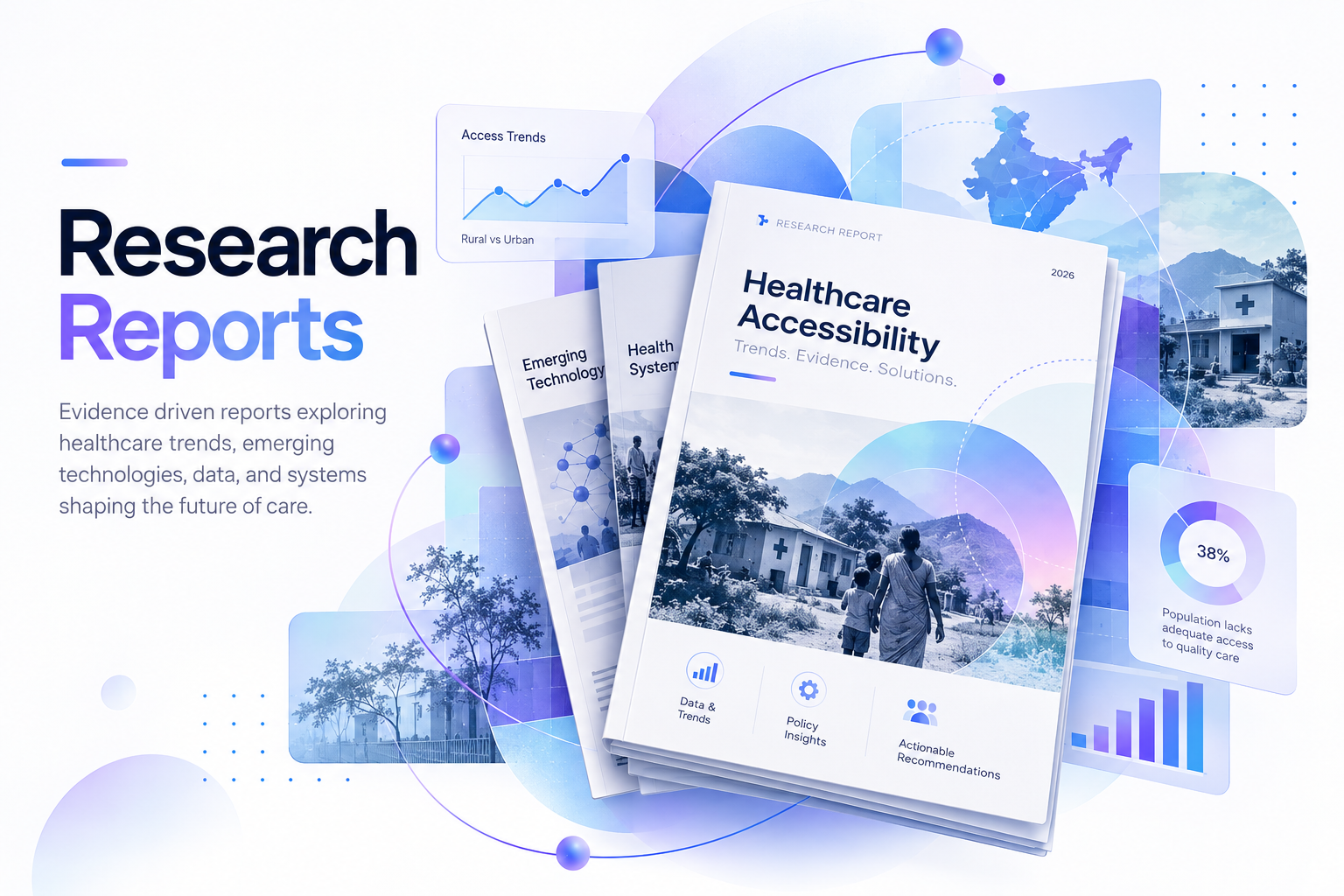
Building Inclusive, Connected, and Accountable Healthcare Systems
A research and policy report prepared for Explicity Technologies
Health Intelligence Lab
October 2026
Product perspective: MedBuddy by Explicity Technologies
Report classification: Secondary research, policy analysis, and proposed implementation framework.
Research transparency: This report synthesises selected public evidence and develops recommendations. It does not present original patient research, an independently evaluated intervention, or a systematic review. References to potential applications of MedBuddy by Explicity Technologies describe proposed directions unless explicitly identified otherwise. They do not establish that particular features, integrations, certifications, or clinical outcomes have already been delivered.
---
Abstract
Digital technology can make healthcare easier to navigate, improve the availability of medical information, and connect patients with services. Its benefits, however, depend on the conditions under which people use it. A patient may live in a connected household yet lack independent access to a phone. Another may use the internet regularly but struggle to understand a digital prescription, recover an account, or complete a consultation. Healthcare digitalisation can therefore reduce some barriers while creating additional obstacles for people with limited resources, literacy, accessibility support, or institutional trust.
This report examines the relationship between healthcare access and digital inequality in India. It considers connectivity, device control, affordability, language, disability, age, gender, clinical capacity, data governance, and the organisation of care. It argues that digital inclusion should be assessed through a person’s ability to complete a necessary healthcare task and obtain appropriate care, rather than through registration, internet use, or application adoption alone.
The report proposes an approach combining dependable physical services, assisted digital participation, understandable communication, portable information, responsible data use, and measurable continuity of care. It also identifies a potential research and implementation role for Explicity Technologies and outlines a proposed inclusion framework for MedBuddy by Explicity Technologies. The recommendations prioritise practical patient benefit, independent evaluation, and the preservation of effective access for people who cannot or do not wish to use digital services.
Keywords: healthcare access, digital inequality, India, health equity, digital health, primary care, telemedicine, patient records, Explicity Technologies, MedBuddy.
---
Executive Summary
Healthcare access is shaped by much more than the availability of medical services. People must recognise a need, identify an appropriate provider, arrange a visit, communicate their concerns, obtain treatment, understand instructions, and continue care when necessary. Each stage can involve financial, geographic, social, and administrative barriers.
Digital systems increasingly influence these stages. Appointment platforms, electronic records, teleconsultations, digital prescriptions, identity systems, and messaging tools can make healthcare more convenient. They can also make access dependent on devices, connectivity, literacy, authentication, and the ability to interpret unfamiliar interfaces.
The central question is therefore not whether healthcare should use technology. It is how technology can support access without making technical capability a condition for receiving essential services.
India’s digital landscape contains both substantial opportunity and uneven participation. National connectivity and device indicators show broad access, but these indicators do not establish that every individual can independently complete a healthcare task. Household access, personal ownership, recent internet use, and health-related digital competence are different concepts. Treating them as interchangeable can lead to unsuitable service design.
WHO’s guidance on digital interventions evaluates benefits alongside feasibility, acceptability, resource requirements, and equity. It explicitly recognises that digital tools depend on functioning health systems. This report adopts that position: digital services should strengthen clinical delivery and coordination rather than become a substitute for essential workforce, medicines, diagnostics, and referral capacity.
Six conclusions guide the analysis.
First, digital inequality has several layers. Connectivity is necessary for many services, but the ability to control a device, understand information, protect privacy, and obtain assistance can be equally important.
Second, digital access must connect to real care. A successful booking or teleconsultation has limited value if the patient cannot obtain the necessary examination, investigation, medicine, or referral.
Third, assisted participation should be treated as a normal service option. Reception teams, community workers, trained navigators, and authorised caregivers can help patients use digital infrastructure while preserving patient choice and confidentiality.
Fourth, information continuity requires accuracy, context, and appropriate sharing. Storing more records does not automatically produce better care. Clinicians need relevant, understandable information, and patients need practical control over how their information is used.
Fifth, digital programmes should be evaluated through patient outcomes and distribution of benefit. Registration totals, downloads, and encounter counts are operational measures. They do not independently demonstrate reduced exclusion, improved continuity, or lower financial burden.
Sixth, commercial health innovation should maintain a clear boundary between verified performance and proposed capability. For Explicity Technologies, a credible contribution would involve identifying specific access problems, developing appropriate solutions, and evaluating them transparently. MedBuddy by Explicity Technologies could provide a setting for testing inclusive clinic workflows, patient record access, navigation, and follow-up, subject to the capabilities actually implemented.
The report recommends a phased implementation approach: establish baseline barriers, improve service reliability, introduce assisted digital workflows, test continuity across providers, and evaluate results before expansion. Throughout this process, patients should retain a dependable route to care when technology is unavailable, inaccessible, or unsuitable.
The intended outcome is a healthcare system in which digital progress translates into practical improvements for people with different abilities, resources, languages, and circumstances.
---
1. Introduction: Healthcare Access in a Digital Society
Healthcare digitalisation changes the way people encounter institutions. Tasks previously completed through conversation, paper forms, or repeated visits may become dependent on websites, applications, electronic records, and automated messages. This can reduce administrative effort, but it also changes who is expected to perform that effort.
A patient may now be asked to create an account, verify a mobile number, select a service, upload documents, review consent choices, and retrieve a prescription. For a confident user with a personal device and a stable connection, these steps may be convenient. For someone unfamiliar with the process, they can become additional barriers between illness and care.
The consequences are particularly important in healthcare because participation is often necessary rather than optional. People may need assistance while experiencing pain, anxiety, fatigue, or uncertainty. A task that appears simple during product testing may become difficult when performed under those conditions.
Digital inequality should therefore be understood as a health-system issue. It concerns the distribution of opportunities to obtain care, understand decisions, and maintain continuity. It is not adequately captured by a division between people who are online and those who are offline.
This report examines how digital inequality interacts with existing healthcare barriers in India. It considers people who lack connectivity, but also those who are connected and remain unable to use services effectively. It examines the role of providers, recognising that poorly designed technology can increase staff workload and indirectly reduce patient access.
The report also develops a practical perspective for Explicity Technologies. A health technology organisation can contribute by reducing specific points of friction, but the contribution should be demonstrated through evidence. The presence of a digital platform does not itself establish improvement in healthcare access.
For MedBuddy by Explicity Technologies, the relevant opportunity is to support understandable, connected care processes. That requires attention to the patient who arrives without a smartphone, the clinician working under time pressure, the caregiver assisting an older adult, and the person who needs information in a familiar language.
An inclusive digital health strategy begins by recognising these different circumstances and designing services around them.
---
2. Purpose, Research Questions, and Scope
The purpose of this report is to explain how digital transformation can influence healthcare inequality and to identify practical approaches for improving inclusion. The report focuses on access to care rather than the entire field of medical technology.
Five questions structure the analysis:
- What forms of digital inequality affect healthcare participation?
- How do these barriers interact with affordability, geography, service quality, and continuity?
- Which design and operational choices can reduce exclusion?
- How can institutions determine whether digital interventions create meaningful benefit?
- What responsible contribution could Explicity Technologies and MedBuddy by Explicity Technologies make?
The scope includes patient registration, service discovery, appointments, telemedicine, health records, communication, referrals, and follow-up. It also considers data protection, accessibility, workforce implications, and the use of artificial intelligence where these influence participation or clinical responsibility.
The report does not assess a specific MedBuddy deployment. No product audit, code review, security assessment, integration verification, or patient outcome evaluation has been conducted for this document. Recommendations should therefore be understood as a proposed direction for development and research.
The report also avoids assuming that one digital model is suitable for every setting. A small clinic, a district hospital, a community health service, and a specialist centre have different workflows and resources. The appropriate intervention depends on the barrier being addressed.
Geographical scope is national, but implementation recommendations emphasise local assessment. National indicators provide context; they cannot establish the needs of every village, urban neighbourhood, or patient group. District and facility research remains necessary.
The analysis is intended for health administrators, clinicians, researchers, policymakers, technology teams, and community organisations. It aims to support decisions about what to build, how to introduce it, and how to determine whether it improves access.
The underlying principle is that inclusion should be demonstrated through the experience of completing care. A service should be assessed by whether people can use it safely and meaningfully, including those who require assistance or an alternative channel.
---
3. Methodology and Evidence Interpretation
This report uses a targeted narrative review of publicly available material. Sources include official Indian statistical releases, government health publications, WHO guidance, and recognised accessibility standards. The review supports a structured analysis, but it is not exhaustive.
The source selection prioritises relevance to healthcare access, digital participation, service design, and governance. Official statistics provide descriptive context. Guidance documents inform principles and evaluation considerations. The proposed implementation framework is an analytical synthesis developed for this report.
Three categories of statement are distinguished.
Reported evidence refers to a statistic, programme description, or documented principle supported by a cited source. Interpretation explains what that evidence may imply, while avoiding unsupported causal conclusions. Recommendation proposes an action or design choice that requires local testing or further evaluation.
This distinction matters because digital health discussions can move too quickly from technical possibility to claims of demonstrated benefit. A platform may be capable of sending reminders without evidence that the reminders improve treatment continuity. A record-sharing function may work technically without evidence that clinicians find the information useful.
Statistical interpretation also requires attention to denominators. Household smartphone availability differs from personal smartphone ownership. Internet use during a specified period differs from continuous access. Self-reported digital skills differ from performance observed during a healthcare task.
The report preserves these distinctions and avoids converting survey percentages into unsupported population counts. It also avoids comparing indicators from different years as though they describe one simultaneous condition.
For recommendations concerning MedBuddy by Explicity Technologies, the report uses conditional and prospective language. It does not invent implementation results, adoption figures, partnerships, or security certifications. A proposed feature is described according to the problem it could address and the evidence needed to establish usefulness.
The evidence review was conducted in October 2026. Individual sources refer to different observation periods, which are identified where relevant. Before operational or legal decisions are made, organisations should verify the current requirements applicable to the exact service and jurisdiction.
---
4. Understanding Digital Inequality as a Layered Problem
Digital inequality is often described as a lack of internet access. That description captures one barrier, but leaves several others unexamined. A person can have connectivity and still lack the practical conditions required to participate.
This report uses a seven-layer framework.
The first layer is infrastructure: electricity, network availability, device capability, and service reliability. The second is affordability: the costs of devices, data, repairs, subscriptions, and assistance. The third is control: whether the person can use a device when needed and without unwanted supervision.
The fourth layer is capability: the ability to understand and complete tasks. The fifth is accessibility: whether the interface and service work for people with different disabilities, languages, and literacy levels. The sixth is trust and safety: whether participation feels understandable, legitimate, and sufficiently private.
The seventh layer is benefit: whether digital participation leads to appropriate care. A person may complete every technical step yet fail to receive treatment because the underlying service is unavailable.
These layers should be considered together. Improving network coverage may help, but it does not solve an inaccessible interface. Translating an application may improve comprehension, but it does not guarantee access to a private device. Providing a digital prescription may simplify information delivery, but it does not make medicines affordable.
For service planning, the framework encourages teams to identify the point of failure precisely. “The patient could not use the app” is an incomplete explanation. Did the patient lack a phone, fail authentication, misunderstand the instructions, encounter an inaccessible control, or abandon the process because no appointment was available?
A precise diagnosis supports a proportionate response. Some problems require infrastructure investment. Others require simpler workflows, trained assistance, or a non-digital route.
The framework also changes evaluation. Inclusion is achieved when the necessary task can be completed with appropriate support and the person receives meaningful benefit. It should not be defined as independent application use by every patient.
---
5. Selected Evidence on Digital Participation in India
The Comprehensive Modular Survey: Telecom, conducted during January-March 2025, provides useful context.
| Indicator | Rural | Urban |
|---|---|---|
| Households possessing at least one smartphone | 82.1% | 91.3% |
| Households with internet access within their premises | 83.3% | 91.6% |
| Mobile ownership, males aged 15+ | 80.7% | 90.0% |
| Mobile ownership, females aged 15+ | 48.4% | 71.8% |
| Internet use in the preceding three months, males aged 15+ | 72.1% | 85.5% |
| Internet use in the preceding three months, females aged 15+ | 57.6% | 74.0% |
Empirical Benchmark Graphs: Digital Inequality in India
Evaluating the 7-layer digital access funnel, CMS Telecom 2025 gender gaps, out-of-pocket health drain, and assisted clinic workflows.
The survey cautions that reported ICT abilities were not directly tested and that subnational estimates require attention to sample size and uncertainty. These indicators describe digital participation, not competence in healthcare tasks.
The analytical implication is that a digital health programme should not rely on household-level connectivity as proof of individual readiness. Planning needs information about actual users, the task they must complete, the assistance available, and the consequences of failure.
A facility could therefore conduct a brief local assessment before introducing a new process. It might observe whether patients can locate an appointment message, understand a consent explanation, or retrieve a prescription. Such an assessment should be voluntary, respectful, and designed to improve services rather than label people as incapable.
National statistics and local observation have different purposes. National data reveal broad patterns and help establish priorities. Local testing reveals whether a specific workflow works in the setting where it will be used.
The report recommends using both. Product teams should avoid designing only for the most confident users, while policymakers should avoid treating all members of a broad demographic category as having the same needs.
Digital participation is heterogeneous. Effective health services must accommodate that variation.
---
6. The Patient Journey: Where Exclusion Can Occur
Digital inequality becomes easier to understand when mapped onto a complete patient journey. The relevant sequence may include discovering a service, booking, registering, consulting, obtaining tests, receiving treatment, sharing records, and returning for follow-up.
At the discovery stage, the patient needs accurate information. Search results or provider listings may be incomplete, outdated, or difficult to interpret. A digitally visible provider is not necessarily the most appropriate option for a person’s needs or budget.
At booking, the patient may encounter account creation, limited slots, unclear fees, or payment requirements. A technically successful booking may still fail operationally if the facility cannot honour the appointment.
Registration can introduce additional steps, including identity matching and mobile verification. These processes should support accurate records without making routine service access depend on a patient resolving every technical problem independently.
During consultation, digital tools may help clinicians retrieve information or document a plan. They can also distract from communication if the workflow is cumbersome. The patient’s ability to explain concerns and understand the response remains central.
After consultation, digital inequality may affect access to results and prescriptions. A document stored in an application is of limited use if the patient cannot open it, interpret it, or present it where needed.
Follow-up presents another risk. A reminder may reach a shared phone at an unsuitable time, contain confusing language, or fail to explain what action is required. Non-response should not automatically be interpreted as refusal.
This report recommends evaluating each transition separately. Teams should ask where patients stop, what burden they encounter, and who is responsible for assistance.
The objective is to avoid a system in which every institution completes its own transaction while the patient remains responsible for connecting them. Digital tools should reduce that coordination burden and make the next step clear.
---
7. Rural Geography, Connectivity, and Service Availability
Rural digital health planning must consider both connectivity and the availability of physical care. A remote consultation may reduce one journey, but the patient may still need local examination, testing, medicine collection, or referral.
Connectivity also varies in practical quality. A location may have nominal coverage while experiencing unstable service at particular times or indoors. A workflow that requires uninterrupted video or repeated uploads may therefore be unsuitable even where basic messaging works.
This report proposes testing technology under the conditions in which it will be used. Product teams should examine older devices, limited storage, weak connections, and interrupted sessions. A process that works only on a recent phone with reliable broadband should not be assumed to serve a remote clinic effectively.
Assisted access can connect local clinical capacity with remote expertise. The local worker may help collect relevant information, support communication, and explain the next step. However, the arrangement must provide appropriate training and avoid assigning tasks beyond the worker’s competence.
Geography also affects maintenance and support. A device failure in a well-connected city may be resolved quickly, while the same problem in a remote facility can interrupt services for longer. Procurement should consider replacement arrangements and local troubleshooting.
For Explicity Technologies, rural deployment would therefore require more than distributing software. A credible implementation plan should establish who supports the clinic, how downtime is managed, and how patients receive care when a component fails.
The report recommends beginning with a limited, locally important workflow. For example, improving the availability of an agreed treatment summary may be more feasible than introducing a complex platform covering every clinical function.
The appropriate measure of progress is whether patients complete necessary care with fewer avoidable difficulties. Reduced travel may be one benefit, but it should be assessed alongside quality, continuity, staff workload, and remaining costs.
Rural digital inclusion succeeds when technology fits the service environment and the patient’s circumstances.
---
8. Urban Connectivity and Hidden Digital Exclusion
Urban environments can conceal digital inequality because connectivity and smartphone use appear common. Yet individuals may lack stable access, sufficient privacy, reliable data, or time to navigate complex processes.
A worker may share a device with family members, change phone numbers frequently, or use an employer-controlled phone. A person in temporary housing may struggle to maintain documents and account access. An older adult may live in a connected household while depending on another person for every online task.
Urban health services also operate within fragmented provider markets. Patients may move between clinics, laboratories, pharmacies, and hospitals, each using different systems. Digitalisation can make each institution more efficient internally while leaving the overall journey disconnected.
This report proposes neighbourhood-level assessment rather than assuming that citywide infrastructure indicates universal readiness. Local research should identify who can access services independently, who needs assistance, and which processes produce repeated failure.
Scheduling is a further concern. Digital appointments can reduce uncertainty, but they may favour users who can monitor availability or respond quickly. People working long shifts may be disadvantaged if appointments are released at inconvenient times or require immediate confirmation.
A more inclusive system could offer several booking channels, preserve appropriate walk-in capacity, and allow staff to assist patients without making them create unnecessary accounts. The specific arrangement should be tested against actual demand.
For MedBuddy by Explicity Technologies, a proposed urban clinic model should consider patients with different work patterns and levels of digital confidence. It should also examine whether digitisation reduces reception workload or merely transfers it into a different form.
Urban inclusion is therefore a question of service organisation as well as connectivity. A well-designed platform should make care easier for people whose lives do not match the assumptions of a standard online customer journey.
---
9. Device Ownership, Shared Phones, and Personal Control
Access to a device does not always mean control over it. A household phone may be available only at certain times. An individual may need permission to use it or may be unable to receive confidential messages.
This distinction has direct implications for healthcare. Appointment reminders, test notifications, mental-health communication, and reproductive-health information may reveal sensitive details when displayed on a shared screen. A service that assumes every mobile number belongs exclusively to one patient can therefore create both access and privacy problems.
This report recommends asking patients how they prefer to receive communication. The answer should not be inferred solely from the number used during registration. Some patients may prefer neutral messages, a voice call at a specified time, a printed note, or communication through an authorised caregiver.
Account recovery deserves equal attention. Lost devices, changed numbers, and unavailable authentication methods should have a supported resolution process. Recovery procedures need to protect records while avoiding unnecessary exclusion.
A phone number should also not be treated as an infallible identity. Families can share numbers, and numbers can change ownership. Systems should manage matching and verification carefully and allow authorised staff to correct mistakes through controlled procedures.
For MedBuddy by Explicity Technologies, proposed record-access workflows should distinguish the patient, the contact person, and any authorised representative. These roles may belong to different people. Combining them into one field can simplify development but create confusion later.
The design goal should be appropriate control. Patients should be able to use assistance without surrendering all privacy or future access. Caregivers should receive the permissions needed for their role, rather than unrestricted access by default.
Device access is therefore a social and operational issue. Understanding who controls the device, when it is available, and how communication is received can prevent problems that technical connectivity measures do not reveal.
---
10. Digital Literacy and Health Literacy
Digital literacy and health literacy overlap, but they are not identical. A person may confidently use messaging, payments, or entertainment applications while struggling to interpret a medical instruction. Another may understand a treatment plan but be unfamiliar with downloading a document or navigating an account.
Healthcare tasks often combine several forms of understanding. The patient must recognise the purpose of the task, interpret the interface, supply accurate information, understand the result, and decide what to do next. Difficulty at any stage can interrupt care.
This report recommends evaluating task-specific capability. Asking whether someone “knows how to use a smartphone” provides limited guidance. Observing whether the person can retrieve an appointment location or distinguish a prescription from an invoice is more informative.
Instructions should use familiar language and make the required action explicit. A message should explain what needs to happen, when, and how to obtain help. Avoiding unnecessary technical vocabulary can benefit users across education levels.
Training should also be proportionate. Patients should not need to complete extensive digital education before receiving care. Short explanations at the point of use may be more practical, especially when paired with a process that can be completed with assistance.
The report proposes teaching through successful completion. A staff member can demonstrate a task, allow the patient to try if they wish, and provide a simple fallback. The aim is confidence and understanding, not compulsory independence.
For Explicity Technologies, usability research should include people with limited formal education and people unfamiliar with health systems. Their difficulties should be treated as evidence about the product and workflow, not as individual deficiencies.
A successful digital health service reduces the amount of specialised knowledge required to obtain care. It should help users understand the next step while ensuring that those who need continuing assistance remain fully included.
---
11. Language, Translation, and Comprehension
Language affects every stage of healthcare access. Patients need to describe concerns, understand choices, interpret instructions, and ask questions. Digital interfaces can either support this process or introduce additional distance.
Translation alone is insufficient. A technically accurate phrase may remain unfamiliar or confusing. Medical abbreviations, administrative terms, and literal translations can make a page difficult to understand even when it appears in the user’s preferred language.
This report recommends designing content around the patient’s task. Appointment instructions should prioritise location, time, preparation, and contact information. A treatment summary should distinguish clinical information from administrative details. Consent explanations should make the purpose and scope of sharing understandable.
Language preference should also be recorded carefully. A person may prefer one language for conversation and another for reading. Some may prefer audio or assisted explanation. Systems should avoid assuming that a single language selection resolves all communication needs.
Automated translation can support communication, but clinically important material requires appropriate review. Errors involving timing, negation, or meaning can create confusion. Organisations should define which content may be translated automatically and which requires a controlled process.
Voice features can help some users, but they introduce their own considerations. Audio may be difficult to hear in crowded settings and may expose private information. The patient should be able to choose an appropriate format.
For MedBuddy by Explicity Technologies, multilingual support should be evaluated through comprehension, not just the number of available languages. Testing should ask whether users understand the required action and can identify how to obtain help.
Local terminology also matters. A clinic may use familiar names for departments or services that differ from formal labels. Bridging these terms can improve navigation without weakening clinical accuracy.
The objective is understandable communication. A multilingual interface should make care easier to complete, rather than simply translating the same complex process into additional languages.
---
12. Gender, Privacy, and Digital Autonomy
Gender can influence device control, time availability, financial independence, and the ability to seek care privately. Digital services should therefore examine who can participate under real household and social conditions.
A system may assume that the person receiving an appointment message can respond immediately, travel independently, or make an online payment. These assumptions may not hold for all users. The resulting exclusion can remain invisible if evaluation counts only completed transactions.
This report recommends examining autonomy separately from access. Can the patient use the service when needed? Can they choose how information is shared? Can they speak privately during a consultation? Can they seek assistance without disclosing more than they wish?
Sensitive communications require particular care. A neutral reminder may be preferable to a message that reveals a diagnosis or clinic specialty. Patients should be asked about communication preferences rather than receiving a uniform default.
Digital scheduling should also consider unpaid care responsibilities. A person may need to arrange childcare or care for another family member before attending. Flexible rescheduling and clear information can help, but these measures should be tested locally.
For Explicity Technologies, gender-responsive research should include confidential interviews and observation methods that do not rely only on public group discussion. Some barriers will not be disclosed in front of relatives or community members.
MedBuddy by Explicity Technologies could support appropriate communication preferences and representative access as part of an inclusion-focused design. Such features should be described as implemented only after they are available and tested.
The aim is to expand the patient’s practical choices. Digital health should not make access dependent on a household gatekeeper or automatically expose information to whoever controls the registered phone.
An inclusive service recognises that privacy, independence, and assistance can coexist when roles and permissions are designed carefully.
---
13. Older Adults and Disability-Inclusive Design
Age and disability influence how people interact with services, but neither should be treated as a single category of capability. Some older adults are confident digital users. Some younger people require substantial accessibility support. Design should respond to functional needs rather than stereotypes.
WHO identifies inaccessible facilities and information, discriminatory practices, and limitations in provider knowledge as contributors to disability-related health inequities. Digital services can reproduce these barriers when accessibility is treated as an optional addition.
The Web Content Accessibility Guidelines organise accessibility around content being perceivable, operable, understandable, and robust. These principles provide a useful baseline, while real-world testing remains necessary to establish whether a healthcare workflow is usable.
This report recommends testing complete tasks with users who have different access needs. A page may pass an automated check while the overall booking or record-retrieval process remains difficult. Evaluation should include error recovery, time limits, document access, and transitions between screens.
Text size, contrast, navigation, keyboard use, and compatibility with assistive technology are practical considerations. Clear explanations and manageable cognitive demands are equally important.
Caregiver support should be available without assuming that the caregiver replaces the patient. The service should communicate directly with the patient wherever possible and provide appropriately scoped assistance.
For MedBuddy by Explicity Technologies, an accessibility target should be documented and verified rather than claimed through general language such as “accessible to everyone.” Published limitations can help users understand what support may be required.
The objective is not to force every person to use the same interface independently. It is to provide an effective route to the same standard of care, with appropriate support and without unnecessary loss of dignity or control.
---
14. Migrants, Remote Communities, and Administrative Exclusion
Digital systems can make records more portable, but they can also create barriers when people lack stable contact details, documents, addresses, or recognised institutional connections.
A migrant worker may obtain care in one location and move before follow-up. A patient in a remote community may use a relative’s number because personal connectivity is unreliable. A person without a permanent address may struggle with a registration form designed around conventional household assumptions.
This report recommends reviewing every required field and asking why it is necessary. Information that is useful for one administrative purpose should not automatically become a condition for all services. Where data are unavailable, staff need an authorised alternative process.
Portability should include understandable information, not merely a persistent identifier. A receiving clinician needs relevant history, current treatment, and the reason for referral. The patient should also have a usable summary that remains available across institutions.
Language and trust require attention in communities with different cultural and institutional experiences. Local partners can help explain processes, but the health service should retain responsibility for quality and confidentiality.
Digital outreach should not assume that the most visible community members represent everyone. Research should include people who do not attend meetings, have limited literacy, or avoid institutions because of previous experiences.
For Explicity Technologies, a credible inclusion programme would document where its systems fail for mobile or marginalised populations. Those failures can guide improvements in identity recovery, contact management, assisted registration, and portable summaries.
The report does not recommend weakening necessary verification. It recommends designing verification so that staff can resolve legitimate difficulties rather than turning them into permanent barriers.
Administrative inclusion requires a balance between accurate records and practical access. Systems should be able to manage uncertainty responsibly while ensuring that people are not excluded simply because their lives do not fit a standard form.
---
15. Affordability and the Hidden Costs of Digital Care
Digital healthcare is sometimes described as inherently cheaper. It can reduce selected costs, but the overall effect depends on what changes across the full care pathway.
A remote consultation may reduce travel but introduce a consultation fee, data expense, or the need for a separate local examination. An electronic prescription may be convenient without changing medicine affordability. A booking platform may save time while adding transaction charges.
India’s National Health Accounts for 2022-23 reported out-of-pocket expenditure at 43.4% of total health expenditure. This is a financing-share measure, not the proportion of each household’s income spent on health. It provides context for examining whether digital services reduce or redistribute patient costs.
This report recommends measuring the complete episode. Costs should include consultation, diagnostics, medicines, transport, lost earnings, digital charges, and any paid assistance. The comparison should be with a clearly defined alternative pathway.
Low expenditure should not automatically be considered success. A patient may spend less because they received efficient care, or because they could not complete treatment. Financial evaluation should therefore include unmet need and abandonment.
For MedBuddy by Explicity Technologies, pricing research should examine affordability for both clinics and patients. A subscription that appears modest to a provider may still be unsuitable for a small practice with limited administrative capacity. Costs transferred to patients should be transparent.
Essential access to a patient’s own usable treatment information should be considered carefully in commercial design. Organisations should avoid creating unnecessary dependence on a continuing subscription or a particular device to retrieve important records.
The report proposes evaluating whether technology reduces total burden, not simply whether one component becomes cheaper. Savings should be reported only after measurement, with clear explanation of the period, population, and costs included.
Affordability is achieved when the patient can complete necessary care without harmful financial trade-offs.
---
16. Primary Care and the Digital Needs of Health Workers
Digital inclusion applies to providers as well as patients. A clinician may have strong clinical expertise but limited time for complex documentation. A receptionist may need to manage a crowded queue while resolving identity problems. A community worker may operate with unreliable connectivity and several reporting obligations.
WHO’s evidence work on digital interventions recognises the importance of health-worker acceptability and feasibility. This supports evaluating technology within actual work conditions rather than assuming that a technically functional application will be adopted effectively.
This report recommends observing workflows before introducing software. Teams should identify repeated tasks, missing information, avoidable duplication, and points where staff must leave one system to use another. The aim is to reduce work that does not contribute to care.
Data entry should be proportionate to the task. Requiring extensive structured information during every brief encounter can create delays and encourage incomplete or inaccurate entries. A useful system should support the minimum clinically and operationally necessary information.
Training should be role-specific. Reception staff, clinicians, pharmacists, and administrators need different capabilities and access. A single general demonstration may be insufficient.
Support should continue after launch. Staff need a reliable way to report problems and receive timely assistance. Repeated workarounds are valuable signals that the system does not fit the setting.
For MedBuddy by Explicity Technologies, success should include staff workload and consultation quality. A reduction in registration time is useful only if it does not create additional work elsewhere or weaken communication with patients.
The report proposes testing the product in ordinary busy periods, not only during supervised demonstrations. This helps reveal whether the system remains usable when interruptions and competing demands occur.
Digital tools should help health workers provide dependable care. Their design should respect professional judgement and the limited time available in frontline services.
---
17. Telemedicine and the Importance of Assisted Access
Telemedicine can connect patients and providers across distance, but its usefulness depends on the clinical task and the surrounding services. Some encounters may be suitable for remote communication; others require physical examination or immediate in-person assessment.
India’s eSanjeevani model includes both assisted provider-to-provider consultation and direct patient-to-provider services. The assisted model illustrates how local support can be part of digital delivery rather than treated as a temporary workaround.
This report recommends treating telemedicine as one component of a care pathway. Before a service begins, the patient should understand what the consultation can provide, what may require a physical visit, and how follow-up will occur.
Assisted access can help with device operation, communication, and local clinical information. However, responsibilities should be clear. The assisting person needs appropriate training, and the remote clinician needs enough information to decide whether the encounter is suitable.
Connectivity failure should have an agreed response. Patients should not be left uncertain about whether the consultation occurred, whether payment was processed, or whether a prescription is final. The service should explain the next step through an available channel.
Privacy matters in both the patient’s environment and the assisting facility. A video connection does not guarantee a confidential conversation. Staff should verify whether the patient can speak comfortably and provide alternatives where possible.
For MedBuddy by Explicity Technologies, any future telemedicine capability should be assessed through completion, appropriate referral, patient understanding, and clinician experience. Consultation counts alone cannot establish effectiveness.
The report also recommends evaluating downstream costs. A remote encounter that leads to several uncoordinated visits may provide less benefit than expected.
Telemedicine is most valuable when it makes appropriate care easier to obtain and preserves a clear route to in-person assessment. Its success depends on clinical coordination as much as technical connection.
---
18. Digital Health Records and Continuity of Care
Health records can support continuity when they make relevant information available at the right time. Their value depends on accuracy, context, and usability, rather than storage volume alone.
A collection of scanned documents may preserve information but remain difficult to search or interpret. A structured record may improve retrieval but still contain outdated treatment or incorrect patient matching. Both situations require deliberate management.
This report recommends distinguishing patient-reported information, clinician-authored information, and automatically extracted content. The source and date should remain visible so that users can assess reliability.
A record should also distinguish a current treatment plan from historical prescriptions. Presenting every medicine ever recorded as active could confuse patients and clinicians. Updating and reviewing information is therefore part of record quality.
Patients need usable summaries. A concise document identifying the encounter, relevant findings, treatment, and follow-up may be more useful during a referral than an unfiltered record containing years of material.
For MedBuddy by Explicity Technologies, a proposed continuity model should prioritise retrieval, comprehension, and correction. Patients and authorised staff need a route to report mismatched or inaccurate information, with changes handled through appropriate review.
Record portability should also consider service discontinuation. People should not lose practical access to their information because they change clinic, device, or software provider. Export and transition arrangements should be planned before deployment.
The report does not assume that more sharing is always better. Information should be shared for a defined purpose with appropriate authority and safeguards. A treating clinician may need a focused set of details rather than unrestricted access to every sensitive record.
The objective is dependable information that supports decisions and reduces unnecessary repetition. Digital records should make care more coherent while preserving patient understanding and control.
---
19. QR Codes, NFC, and Patient Identification
QR codes and NFC can make selected administrative tasks easier, such as identifying a record or opening an authorised retrieval process. They should be evaluated as interface mechanisms rather than as complete healthcare solutions.
A card or code does not itself establish the accuracy of a record, the identity of the person presenting it, or permission to view all associated information. These questions require a wider workflow.
This report recommends separating identification from authorisation. A code may help locate a patient profile, but access to sensitive information should still depend on the user’s role and the applicable permission process.
The design should account for lost cards, damaged codes, unavailable readers, and incorrect matches. A patient should have an alternative route to care and record recovery. Staff should understand what to do when the mechanism fails.
If MedBuddy by Explicity Technologies uses or develops QR- or NFC-supported access, its value should be measured through practical outcomes. These may include reduced search time, fewer duplicate registrations, or easier retrieval of an agreed summary. Claims should be supported by testing.
The report recommends avoiding exposed medical details in openly readable codes. The information carried by a code should be proportionate to its purpose, and the consequences of someone else scanning it should be understood.
Patient communication is also important. Users should know what the card does, what it does not do, and what action to take if it is lost. Promotional phrases should not imply guaranteed access to every record or emergency service.
Such mechanisms can be useful when they simplify a well-designed process. They become risky when convenience obscures identity, consent, or recovery requirements.
The intended benefit is easier navigation through an accountable system, not dependence on a physical token as the sole route to treatment.
---
20. Digital Public Infrastructure and Interoperability
Digital public infrastructure can provide common foundations for identification, information exchange, and service coordination. Its usefulness depends on how individual services implement those foundations and how patients experience the resulting processes.
The ABDM health data policy emphasises voluntary participation, consent, and non-exclusion. Its provisions state that lack of a health ID should not by itself lead to denial of healthcare. These principles are relevant to inclusive design, while organisations must verify the current operational requirements that apply to their specific integration.
Interoperability should be understood at several levels. Technical exchange allows systems to transmit information. Semantic consistency helps receiving systems interpret it. Organisational coordination determines whether the information is used appropriately. Patient understanding influences whether sharing is meaningful.
A technically successful exchange may still fail clinically if the receiving team cannot identify relevant information or if the record is incomplete. Integration should therefore be tested through real tasks rather than data transfer alone.
For Explicity Technologies, participation in an ecosystem should be described precisely. Product material should distinguish planned integration, testing, completed technical integration, and actual use in clinical workflows. These are different stages.
The report recommends avoiding vague claims such as “fully connected” unless the scope is defined. Which institutions, data types, and workflows are included? What happens when a receiving provider uses a different system? What remains outside the integration?
Interoperability should also reduce dependence on a single vendor. Patients and clinics benefit when information can move through appropriate, understandable processes.
The broader objective is continuity across institutions. Common infrastructure can support that objective, but it does not remove the need for accurate records, clear responsibilities, assisted access, and patient communication.
---
21. Consent, Privacy, and Meaningful Patient Choice
Privacy and access should be designed together. A service that protects information but is impossible to use creates one problem; a convenient service that exposes sensitive information creates another. Inclusive design must address both.
Consent should be connected to a clear purpose. Patients need to understand what information is involved, who will receive it, and why. A broad acceptance screen may be easy to record but difficult to interpret.
This report recommends separating necessary service processing from optional uses where appropriate. Patients should not have to navigate unrelated permissions merely to obtain a basic appointment or treatment summary.
Assistance requires careful handling. A staff member helping someone operate a device should not automatically become an unrestricted recipient of that person’s records. Similarly, a caregiver’s access should reflect the patient’s wishes and applicable requirements.
Communication preferences can reduce avoidable disclosure. Neutral notifications, patient-selected channels, and careful handling of shared devices are practical measures. These should be supported by clear operational procedures.
For MedBuddy by Explicity Technologies, privacy design should include the full lifecycle: collection, use, sharing, correction, retention, access review, and service exit. A privacy notice alone does not establish that daily practice follows the intended rules.
The report recommends assigning responsibility for responding to patient questions and complaints. People should be able to ask what information is held and seek assistance without needing specialised technical knowledge.
Data use for research should be distinguished from routine care. A branded research programme should not assume that clinical participation automatically authorises every secondary use.
Meaningful choice requires understandable options and practical consequences. Patients should know what happens if they decline an optional feature or cannot complete a digital step.
Trust is strengthened when institutions explain their practices honestly and respond consistently. It is weakened when convenience depends on permissions that users do not understand.
---
22. Reliability, Cybersecurity, and Service Continuity
Reliability is an inclusion issue because failures do not affect every patient equally. A confident user may recover from an error or try another device. A person with limited resources may lose an appointment, repeat travel, or abandon the process.
This report recommends planning for common disruptions before launch. These include unavailable connectivity, authentication problems, device failure, incorrect records, service outages, and delayed messages. Each should have an operational response.
The fallback process should preserve essential care. Staff need to know how to register a patient, document an encounter, and provide instructions when the digital service is unavailable. Information entered later should be reconciled carefully.
Cybersecurity should be integrated into operations rather than presented only as a product claim. Access should reflect staff roles, accounts should be managed through employment changes, and unusual activity should have a response pathway.
Backups and recovery arrangements should be tested. The existence of a backup does not prove that services can be restored within an acceptable period. Recovery exercises help establish whether the organisation can continue functioning.
For Explicity Technologies, security and reliability statements should be specific and verifiable. General claims such as “completely secure” are not appropriate substitutes for describing controls, testing, responsibilities, and limitations.
MedBuddy by Explicity Technologies should also have a clear support and incident communication process if deployed in clinical workflows. Clinics need to know whom to contact, what information to provide, and how patients will be supported.
The report proposes tracking the patient consequences of technical incidents. A short outage may be operationally minor but still matter if it interrupts urgent communication or forces repeat visits.
The goal is resilient service delivery. Technology should fail in ways that are understandable and recoverable, with care continuing through an appropriate alternative rather than stopping at the screen.
---
23. Artificial Intelligence: Potential Uses and Necessary Boundaries
AI may support administrative work, information retrieval, translation, documentation, and selected clinical tasks. The risks and evidence requirements differ across these uses.
WHO’s guidance on large multimodal models examines emerging health applications and the uncertainty surrounding broad claims of capability. This supports evaluating each intended use rather than assuming that strong performance on one task establishes suitability for another.
This report recommends beginning with clearly defined problems. An appointment assistant that explains clinic hours has a different responsibility from a system influencing clinical assessment. The interface should make the role clear to patients and staff.
AI-generated summaries should preserve links to source information where practical. Clinicians need a way to verify important details, especially when omissions or altered wording could affect interpretation.
Language performance requires specific testing. A system that performs well in formal English may behave differently with local expressions, mixed-language speech, or incomplete descriptions. Evaluation should reflect the intended population.
Human review should be meaningful. Asking a clinician to approve a large volume of generated content under time pressure may not provide adequate oversight. Workflow and workload should be considered alongside model performance.
For MedBuddy by Explicity Technologies, any proposed AI capability should be described according to its implemented scope and evidence. Product communication should distinguish assistance from diagnosis and avoid claiming clinical improvement without appropriate evaluation.
The report also recommends monitoring errors and changes over time. A model update can alter behaviour, so evaluation should not end at initial launch.
Patients should have a route to human assistance and a clear explanation when automated output is uncertain or unsuitable. AI should reduce unnecessary work without transferring hidden risk to users.
Responsible adoption requires a defined task, appropriate evidence, accountable oversight, and the ability to stop or revise the system when performance is inadequate.
---
24. Commercial Incentives, Platform Design, and Patient Interests
Commercial sustainability matters because services need resources to operate and improve. At the same time, business incentives can influence which patients are prioritised, what information is displayed, and which activities are encouraged.
A platform may benefit from increasing transactions even when additional activity does not improve care. A provider directory may favour paying participants unless the arrangement is transparent. A subscription model may encourage dependence on features that patients later need to access their information.
This report recommends examining these incentives explicitly. Organisations should identify where revenue objectives could conflict with patient interests and establish practical safeguards.
Service listings should distinguish verified information from promotional content. Patients need to understand whether ranking reflects location, availability, sponsorship, or another criterion. Claims about quality should have a clear basis.
Pricing should be understandable before the relevant commitment. Patients and clinics should know recurring charges, cancellation terms, and the costs of retrieving or transferring information where these apply.
For Explicity Technologies, responsible commercial design would mean connecting product value to measurable operational or patient benefit. Growth should not be treated as evidence that access has improved.
MedBuddy by Explicity Technologies could support smaller clinics, but implementation costs should include training, equipment, staff time, and support. A low software price alone does not establish affordability.
The report recommends preserving practical exit options. Clinics and patients should be able to transition without unnecessary loss of access to important information.
Partnerships should also be assessed for distribution of benefit. A commercially attractive urban segment may not represent the population facing the greatest exclusion. If a programme claims an equity objective, its reach and outcomes should reflect that objective.
Sustainable health innovation requires both a viable operating model and a clear account of whose problems it solves. Transparency about that balance strengthens credibility.
---
25. A Research Role for Explicity Technologies
Explicity Technologies can develop a credible role by treating healthcare access as a problem to investigate before treating it as a market to serve. This report recommends a research programme focused on observable barriers and measurable improvements.
The first priority should be workflow research. Teams could study how patients register, locate records, receive instructions, and complete follow-up in participating clinics. Observation should include unsuccessful attempts and workarounds, not only smooth interactions.
The second priority should be inclusion research. Participants should represent different languages, ages, disabilities, device access, and levels of digital confidence. Recruitment should avoid relying exclusively on existing enthusiastic users.
The third priority should be implementation research. A feature that appears useful during a demonstration may create new burdens during routine use. Evaluation should examine training, support, workload, and the resources needed to sustain delivery.
The fourth priority should be patient outcomes relevant to the intervention. For a record-retrieval tool, these may include successful retrieval and reduced duplication. For a follow-up process, they may include attendance and continuity. Claims should remain within the measured scope.
The report recommends maintaining a distinction between research findings and promotional material. A study should state methods, limitations, funding relationships, and the organisation’s role. Negative or inconclusive findings should not be concealed.
Explicity Technologies should also seek appropriate external expertise. Clinical, public-health, accessibility, and data-governance perspectives can reveal issues that a product team may miss.
This proposed role does not require presenting the organisation as having already solved national inequality. A more credible contribution is to demonstrate that a defined intervention improves a defined process for a defined population.
Over time, a transparent body of implementation evidence could inform both product development and broader discussions about inclusive healthcare infrastructure.
---
26. Proposed Inclusion Framework for MedBuddy by Explicity Technologies
This report proposes six design commitments for MedBuddy by Explicity Technologies. These are recommendations, not statements that all features currently exist.
Assisted participation: Patients should be able to receive staff support for registration and record access. Assistance should be recorded where useful for evaluation without becoming a negative label.
Multiple access routes: Essential workflows should have an appropriate alternative when a patient cannot use a smartphone, receive an OTP, or access the internet.
Understandable information: Appointment details, prescriptions, results, and follow-up instructions should distinguish clinical content from administrative information and explain the next action clearly.
Continuity across encounters: Relevant records should be retrievable with appropriate permissions, and current information should be distinguishable from historical material.
Patient control: Communication preferences, representative roles, and sharing choices should be understandable and proportionate.
Measurable performance: The product should be evaluated through completed tasks, patient experience, staff workload, and distribution of benefit.
| Proposed capability | Access problem addressed | Evidence needed |
|---|---|---|
| Staff-assisted registration | Difficulty completing digital forms | Completion and waiting-time results |
| Alternative record lookup | Lost cards, changed numbers, failed authentication | Recovery success and matching accuracy |
| Understandable visit summary | Confusion after consultation | Patient comprehension and usability |
| Follow-up coordination | Missed or unclear next steps | Appropriate follow-up completion |
| Accessible interface | Barriers related to disability or literacy | Task testing with relevant users |
| Controlled record sharing | Fragmented information | Successful, appropriate exchange |
Implementation should proceed according to clinical and operational priorities. A simple, reliable workflow may be more valuable than a broad set of partially integrated features.
MedBuddy by Explicity Technologies should also distinguish product availability from demonstrated benefit. A feature can be described accurately without claiming that it has reduced costs or improved health outcomes before those results are measured.
The proposed framework places patient access and provider usability within the same design process.
---
27. Proposed Clinic Workflow
A practical clinic workflow begins before the consultation. Patients should be able to learn what the clinic provides, how to attend, and whether an appointment is necessary. Information should be available through channels appropriate to the local population.
At arrival, staff should identify whether the patient already has a record and whether assistance is needed. The process should support accurate matching without creating unnecessary delay. Patients should not be required to resolve unfamiliar technical problems alone.
During consultation, the clinician should be able to review relevant information and record the current plan with manageable effort. The interface should support conversation rather than dominate it.
After consultation, the patient should receive an understandable summary through an agreed format. This may include a printed document, an accessible digital version, or both. The patient should know how to obtain clarification.
If tests or referrals are needed, the next step should be specific. A generic instruction to “consult a specialist” may leave the patient uncertain about destination, timing, or preparation.
Follow-up should use communication preferences established with the patient. A missed appointment should trigger a proportionate response based on clinical and operational priorities, rather than repeated automated messages without context.
For MedBuddy by Explicity Technologies, this workflow could serve as a pilot design. Each stage should be tested for time, comprehension, error, and staff burden.
The system should also support exceptions. A walk-in patient, an unavailable phone, a duplicated record, or a service outage should have a known resolution path.
The intended result is a clinic process in which technology makes routine tasks more dependable. Patients should experience clearer care, while staff retain the ability to respond to circumstances that do not fit a standard sequence.
---
28. Patient Navigation and Community Assistance
Patient navigation can help people understand services, prepare for visits, complete referrals, and maintain follow-up. Digital tools may support navigation, but the value often comes from informed human assistance.
This report proposes defining the navigator’s role carefully. Navigation should help with coordination and information; it should not be confused with clinical decision-making unless the person is appropriately qualified and acting within that role.
A navigator may explain where to attend, help retrieve a document, identify a missing administrative step, or contact a receiving facility. These tasks can reduce the burden placed on patients and families.
Assistance should remain accountable. Navigators need training, supervision, appropriate access, and a process for escalating clinical questions. Their activity should be documented proportionately.
Community partnerships can extend reach, particularly where language, mobility, or trust creates barriers. However, community organisations should not be expected to compensate indefinitely for unavailable services.
For Explicity Technologies, navigation research could examine which tasks require human support and which can be simplified through design. This may prevent the organisation from building automation for problems better addressed through a trained person.
MedBuddy by Explicity Technologies could support navigation by making the next step visible to authorised staff. The system should avoid exposing unnecessary information or creating a parallel record that becomes inconsistent with clinical documentation.
Evaluation should measure whether assistance leads to completed care, not simply how many calls or messages are sent. It should also assess whether users feel respected and retain control over decisions.
Navigation is particularly valuable when the health system is fragmented. Its purpose is to connect institutions and clarify responsibilities so that patients do not have to become expert administrators to receive treatment.
---
29. Pilot Design and Implementation Roadmap
A pilot should test a defined service model rather than serve only as a promotional launch. The report recommends beginning with a limited number of clinics representing different operating conditions.
Preparation should include baseline observation, stakeholder consultation, workflow mapping, and identification of major barriers. The pilot team should specify which outcomes the intervention is expected to improve and which remain outside its scope.
The first implementation stage should focus on basic reliability. Registration, record retrieval, visit summaries, and support arrangements should function consistently before more complex features are added.
The second stage should introduce assisted and alternative access routes. Staff should be trained to recognise difficulties and resolve them without making patients feel responsible for system design problems.
The third stage should test continuity, such as follow-up coordination or referral information exchange. This requires participation from the relevant receiving services, not just the originating clinic.
The fourth stage should evaluate performance and revise the model. Expansion should depend on the evidence, the resources required, and the ability to maintain support.
An illustrative pilot may run over several phases across twelve months, but the duration should reflect the chosen outcomes. Short operational measures can be assessed quickly; sustained continuity requires longer observation.
For Explicity Technologies, a pilot protocol should distinguish routine product analytics from research activities requiring additional oversight or consent. Responsibilities should be agreed before data collection begins.
The report recommends predefined conditions for pausing a feature. Repeated record mismatches, inaccessible workflows, excessive staff burden, or unresolved privacy concerns should trigger review.
A successful pilot produces a reliable account of what worked, for whom, under what conditions, and at what cost. That account is more valuable than a broad launch claim unsupported by operational evidence.
---
30. Measurement and Equity Indicators
Evaluation should connect digital activity to healthcare access. The number of accounts created can describe adoption, but it cannot establish whether patients obtained appropriate care.
This report proposes a compact set of indicators.
| Domain | Proposed indicator | Interpretation |
|---|---|---|
| Registration | Proportion completing registration through any supported channel | Include assisted completion |
| Record access | Proportion of eligible encounters with relevant information available | Assess accuracy and relevance |
| Comprehension | Proportion understanding the agreed next step | Use suitable assessment methods |
| Continuity | Proportion completing clinically appropriate follow-up | Define eligibility and timing |
| Referrals | Proportion reaching the intended service | Distinguish referral issued from completed |
| Workload | Staff time and duplicate entry burden | Examine all affected roles |
| Patient burden | Time, travel, and direct expenses | Assess the complete episode |
| Equity | Differences between relevant user groups | Avoid relying only on overall averages |
Each indicator needs a clear denominator. “Successful record retrieval” could refer to all attempts, all patients, or only encounters with previously digitised records. These definitions produce different results and should be reported explicitly.
Assisted use should not automatically be counted as failure. If the aim is access, a patient completing a task with appropriate help may represent successful inclusion. Independent use can be measured separately.
Missing data also require attention. People who abandon a process may be absent from standard analytics. Evaluators should seek to understand these experiences through suitable observation or follow-up.
For MedBuddy by Explicity Technologies, an equity dashboard should be designed around actionable questions. If a group experiences more failures, the team should investigate the workflow rather than merely publish the difference.
Measurement should remain proportionate. Excessive data collection can burden clinics and introduce unnecessary privacy risks. A smaller set of well-defined measures is often more useful than a large collection of poorly interpreted numbers.
The objective is evidence that guides improvement and supports honest claims about benefit.
---
31. Evaluation Design and Causal Claims
An improvement after implementation does not automatically prove that the technology caused it. Staffing, patient volume, seasonal changes, or other programmes may influence results.
This report recommends selecting an evaluation design before the pilot begins. A comparison group, phased rollout, or repeated measurement may strengthen interpretation, depending on feasibility and the question being asked.
For example, a registration tool could be evaluated through observed task times and error rates before and after introduction, with attention to changes in patient mix. A follow-up intervention may require a longer comparison and adjustment for relevant differences between participants.
Qualitative research should complement numerical outcomes. Interviews and observation can explain why patients need assistance, why staff develop workarounds, and why a technically functioning feature is not used.
Implementation fidelity matters. Evaluators should establish whether training occurred, support was available, and the intended workflow was followed. Poor results may reflect an ineffective model or incomplete delivery; the distinction affects future decisions.
The report recommends reporting uncertainty and limitations clearly. Small pilots should not support national impact claims. Improvements in one clinic should not be assumed to apply across all regions or patient groups.
For Explicity Technologies, external review can strengthen credibility, particularly when evaluation findings are used in commercial communication. The organisation’s role in design, funding, and analysis should be disclosed.
Outcome reporting should include negative and unintended effects. A system may reduce waiting while increasing staff documentation burden. It may improve retrieval for registered users while excluding those with failed authentication.
The appropriate conclusion may be that a feature is promising but needs revision. That is a useful research result.
Credible evaluation supports decisions about continuation, adaptation, and scale. Its purpose is to determine whether the intervention works, rather than to produce evidence that it must work.
---
32. Economic Sustainability and Procurement
A digital health service needs sustainable financing, but affordability should be assessed across its entire operating model. Software charges are only one component.
Clinics may require equipment, connectivity, training, support, migration, and staff time. Patients may face data costs, printing costs, transaction fees, or paid assistance. Procurement should make these requirements visible.
This report recommends calculating total cost of ownership over an appropriate period. The calculation should include maintenance, replacement, updates, support, and transition arrangements. A low initial price can be misleading when recurring costs are substantial.
Value should be linked to a defined benefit. A tool may justify expenditure by reducing administrative time, improving record availability, or supporting continuity. These benefits should be measured rather than assumed.
For MedBuddy by Explicity Technologies, pricing should reflect the diversity of providers. A small clinic may need a limited set of reliable functions, while a larger institution may require additional controls and integration. Complexity should not be imposed where it provides little value.
Procurement should also address exit. Clinics need to understand how information will be exported, what support is available during transition, and whether essential patient access continues during the change.
The report recommends avoiding dependence on short-term subsidies without a continuation plan. A pilot can appear affordable when training and support are externally funded, then become difficult to maintain.
Public-interest partnerships may support inclusion, but their responsibilities should be explicit. Who pays for assisted access? Who supports patients who cannot afford a paid feature? Who maintains the service after initial funding ends?
Sustainability is achieved when the service remains useful, affordable, and supportable over time. It requires operational planning as well as a business model.
---
33. Risk Assessment and Corrective Action
Digital health programmes should identify foreseeable risks and assign responsibility before expansion. A risk register is useful only when it leads to action.
This report proposes prioritising risks according to their potential effect on patients and service continuity. Record mismatches, misleading instructions, inaccessible workflows, and failures in urgent communication deserve particular attention.
| Risk | Possible consequence | Proposed response |
|---|---|---|
| Failed authentication | Delayed or abandoned access | Supported alternative verification |
| Incorrect patient matching | Information used for the wrong person | Review and correction controls |
| Inaccessible interface | Unequal task completion | User testing and assisted routes |
| Unclear notification | Missed next step or privacy exposure | Patient-selected communication |
| Service outage | Interrupted clinic workflow | Tested continuity procedure |
| Excessive documentation | Reduced clinical time | Workflow redesign |
| Unverified product claim | Misleading expectations | Evidence-based communication |
The table is a planning framework, not a statement that these failures have occurred in MedBuddy.
Corrective action should have an owner, a deadline, and a verification method. Marking an issue “resolved” should mean that the change was tested under relevant conditions.
Patient complaints can reveal risks that internal testing misses. The process for receiving complaints should be accessible and should not require the patient to navigate the same failing system.
For Explicity Technologies, risk review should involve product, clinical, operational, and accessibility perspectives. A problem may appear minor in software terms while creating substantial difficulty for a patient.
The report also recommends monitoring the burden of workarounds. Repeated manual correction can conceal an underlying design problem and place pressure on staff.
The goal is not to eliminate every possible inconvenience before deployment. It is to identify material risks, provide proportionate safeguards, and maintain the ability to correct or withdraw a feature when necessary.
---
34. Policy Recommendations for Inclusive Digital Healthcare
Public policy should support digital innovation while preserving access for people with different capabilities and preferences. The report recommends a focus on service outcomes rather than mandatory use of a particular interface.
First, essential services should maintain appropriate assisted and alternative channels. Digital participation should improve convenience without making a smartphone the practical gateway to care.
Second, public procurement should include usability, accessibility, data portability, and continuity requirements. Evaluation should involve real users and frontline staff, not only technical demonstrations.
Third, digital programmes should report distribution of benefit. National totals can conceal exclusion among particular locations or groups. Equity analysis should be built into monitoring.
Fourth, institutions should support workforce capacity. Training, supervision, and time for implementation are necessary inputs. Technology should not be introduced as an unfunded additional responsibility.
Fifth, data governance should be understandable and operational. Patients need clear communication and accessible complaint routes. Staff need procedures they can apply consistently.
Sixth, research should include unsuccessful users and non-users. A programme cannot assess exclusion by studying only those who completed the process.
Seventh, financing should account for assisted access. Human support is part of the service cost, not evidence that the digital model has failed.
For Explicity Technologies, these recommendations provide a basis for responsible participation in public and private healthcare ecosystems. For MedBuddy by Explicity Technologies, they suggest that product quality includes the ability to support people outside the ideal digital-user profile.
Policy should create conditions in which useful innovation can be tested and scaled, while institutions remain accountable for care. The relevant public objective is equitable benefit, not digital adoption for its own sake.
---
35. Research Gaps and Future Priorities
Several evidence gaps remain. National connectivity data provide context, but they do not reveal how well people perform specific healthcare tasks. More direct research is needed on registration, consent comprehension, record retrieval, appointment completion, and follow-up.
Future studies should examine assistance. Who provides it, how much time it requires, whether privacy is preserved, and whether patients retain control are important questions. Assisted access should be studied as a legitimate model rather than treated only as an exception.
Research should also examine the interaction between patient and provider burdens. A tool may save patients time while increasing staff work, or reduce staff work by transferring tasks to patients. The overall effect should be assessed.
Long-term evaluation is another priority. Initial adoption may be influenced by intensive support or novelty. Researchers should examine whether benefits persist after the pilot period and whether maintenance costs remain manageable.
For MedBuddy by Explicity Technologies, a useful research agenda could begin with a small number of questions directly related to its implemented workflows. These might concern record availability, reception burden, patient understanding, or follow-up completion.
The report recommends avoiding overly broad impact objectives in early studies. A precise finding about a specific process can be more credible and useful than a vague claim of transforming healthcare.
Research should also include people who choose not to use digital features. Their reasons may reveal privacy concerns, unsuitable design, or a preference for effective existing channels.
Finally, findings should be communicated in accessible language. Patients and participating clinics should be able to understand what was learned and what changes will follow.
A responsible evidence programme can improve both products and public understanding of digital inequality.
---
36. Limitations and Interpretation Boundaries
This report provides a broad analytical framework, but its conclusions have limits. The evidence review was targeted rather than systematic, and no original dataset was analysed.
The report does not estimate the national prevalence of difficulty with digital healthcare tasks. Connectivity and ownership measures cannot be converted directly into such an estimate. Local task testing remains necessary.
It also does not determine the effectiveness of a particular MedBuddy feature. No product deployment, security control, accessibility claim, or integration has been independently verified for this report.
Recommendations are based on the interaction between documented principles and practical service-design reasoning. They should be tested before being presented as proven interventions.
Some sources describe earlier observation periods. Their use is appropriate for context, but they do not establish current conditions in every location. Local institutions should update operational assumptions before implementation.
The report does not provide a legal compliance assessment. Data protection, clinical practice, accessibility, and digital infrastructure obligations depend on the service and applicable requirements. Organisations should verify those requirements separately.
There is also no single definition of success suitable for every intervention. A record-retrieval tool, a telemedicine service, and a navigation programme require different outcomes and timeframes.
These limitations do not remove the value of the framework. They clarify its purpose: to guide more precise research, responsible product development, and practical implementation.
For Explicity Technologies, the next step should be to convert selected recommendations into a transparent pilot with defined users, tasks, outcomes, and safeguards. Evidence from that work would provide a stronger basis for product-specific claims and future reports.
---
37. Conclusion
Healthcare access and digital inequality are closely connected because digital systems increasingly shape how people enter, navigate, and continue care. Technology can reduce administrative burden, improve information availability, and connect services. Its benefits depend on whether people can use it meaningfully and whether the underlying care remains available.
The report argues for a broad understanding of inclusion. Connectivity matters, but so do device control, affordability, language, accessibility, privacy, assistance, and trust. A patient who completes a task with appropriate support should be considered included, even if they do not use the technology independently.
Health systems should therefore evaluate complete pathways. Registration, appointments, consultations, records, and reminders are useful only when they support appropriate care. Digital activity should be connected to patient comprehension, continuity, affordability, and equitable outcomes.
For Explicity Technologies, the opportunity is to develop and evaluate solutions that address specific barriers. Credibility will depend on transparent methods, accurate claims, and attention to users who are often excluded from product design.
For MedBuddy by Explicity Technologies, the proposed direction is a dependable and inclusive clinic platform that supports both patients and providers. This requires assisted participation, clear communication, responsible information handling, practical alternatives, and measurable performance.
India’s digital healthcare future should be judged by whether people can obtain care with greater confidence and less avoidable difficulty. Progress becomes meaningful when the benefits reach those who need assistance, live with limited resources, or do not fit the assumptions of a standard digital workflow.
---
Appendix A. Illustrative Patient Scenarios
The following examples are hypothetical and are included to demonstrate design considerations. They are not accounts of actual MedBuddy users.
A1. An older patient without an independent smartphone
An older patient arrives at a clinic with a relative. The relative’s phone was used during an earlier visit, but it is unavailable today. A system that requires the same phone for every encounter could delay record retrieval.
An inclusive workflow would provide authorised staff with an alternative verification process. The patient could receive a printed summary and choose whether future communication should go through the relative. The system would distinguish the patient from the contact person.
For MedBuddy by Explicity Technologies, the relevant evaluation would examine recovery success, matching accuracy, time required, and the patient’s understanding of the arrangement. The presence of an alternative button alone would not establish successful inclusion.
A2. A working patient with limited time
A worker can use a smartphone but cannot repeatedly check appointment availability during the day. A booking system that releases limited slots without alternative access may be inconvenient despite being technically usable.
A proposed response could combine flexible booking channels, clear confirmation, and manageable rescheduling. Evaluation would assess completed visits and the burden of waiting or repeat travel.
The lesson is that digital capability does not eliminate time constraints. Service organisation remains important.
A3. A patient using a shared phone
A patient receives a notification containing sensitive clinical information on a device used by several family members. The patient then avoids further communication through the service.
An inclusive design would ask about communication preferences and use proportionate notification content. It would provide a way to change the contact arrangement without losing access to care.
Evaluation should examine whether patients understand and can manage these choices.
A4. A rural teleconsultation requiring follow-up
A remote consultation identifies the need for an in-person assessment. The patient receives a digital recommendation but does not know which facility can provide the service.
A coordinated pathway would provide a specific destination, explain preparation, and support referral completion where needed. The outcome would be assessed through receipt of appropriate care, not merely the completed remote call.
These scenarios show why digital inclusion requires workflow design and institutional responsibility in addition to an interface.
---
Appendix B. Proposed Research Questions for Explicity Technologies
A practical research programme should begin with questions that are narrow enough to answer reliably.
Registration: Which patients need assistance? At what point do errors occur? Does a revised process reduce waiting without weakening identity accuracy?
Record retrieval: Can clinicians find relevant information during ordinary consultations? Are historical and current records distinguishable? How are incorrect matches detected and corrected?
Patient understanding: Can patients explain the next step after receiving a digital or printed summary? Which terms create confusion? Does the preferred communication format improve comprehension?
Follow-up: Are missed visits associated with unclear instructions, costs, timing, technical failure, or other barriers? Does the proposed intervention address the main reason?
Accessibility: Can users with different disabilities complete the relevant tasks? Are assistance and alternatives effective when independent use is difficult?
Workforce impact: Does the system reduce duplicate entry? Which role absorbs additional work? What support is required after initial training?
Privacy: Do patients understand the difference between contact details, representative access, and record sharing? Can they change preferences without difficulty?
Economic value: What is the complete cost to the clinic and patient? Which measured benefits justify that cost?
The research should include a method for recording unexpected findings. Product teams often learn most from cases that do not match their initial assumptions.
Results should be reviewed before adding features. If the main barrier is unavailable clinical capacity, additional interface functionality may have limited value. If the main barrier is an unclear process, a simpler design may be more effective than a complex new module.
---
Appendix C. Proposed Implementation Readiness Checklist
Before introducing a digital workflow, a participating institution should be able to answer the following questions.
Service purpose: What specific problem is being addressed? Which patients and staff are affected? What would successful improvement look like?
Operational readiness: Who owns the workflow? Are staff trained? Is support available during service hours? Are receiving providers included where referrals or record exchange are involved?
Patient inclusion: Can people use the service without a personal smartphone? Are language and accessibility needs addressed? Can staff provide assistance without exposing unnecessary information?
Information quality: Is patient matching reliable? Are sources and dates visible? Is there a correction process? Can current and historical information be distinguished?
Continuity: What happens during an outage? Can patients receive a usable summary? Can essential information be transferred if the clinic changes systems?
Evaluation: Are baseline measures available? Are denominators defined? Will unsuccessful attempts be captured? Is there a plan to assess who benefits?
Communication: Do product and clinic materials accurately describe the implemented capability? Are limitations explained? Are proposed benefits clearly distinguished from measured results?
This checklist should support discussion rather than become an administrative exercise. An unanswered question indicates a planning need, not necessarily a reason to abandon the intervention.
For MedBuddy by Explicity Technologies, readiness should be assessed jointly with the clinic. Software teams cannot independently determine whether the surrounding service can fulfil the promise made to patients.
---
Appendix D. Publication and Evidence Standards
A branded research report should maintain a clear distinction between institutional perspective and empirical findings. The inclusion of Explicity Technologies or MedBuddy by Explicity Technologies should identify the context of the report without implying independent validation of the product.
Future publications should state the research question, method, setting, sample, observation period, and limitations. If a study evaluates MedBuddy, the organisation’s role in funding, design, implementation, and analysis should be disclosed.
Claims about cost reduction, time savings, treatment continuity, or health improvement should include the relevant denominator and comparison. A percentage without context can mislead even when the underlying calculation is correct.
Case studies should be genuine and appropriately authorised. Hypothetical examples should remain clearly labelled. Testimonials should not be substituted for outcome evaluation.
Statistics should retain their reference years and definitions. Household access should not be presented as personal ownership, and service activity should not be presented as population coverage without supporting evidence.
Product descriptions should distinguish available, tested, planned, and proposed functions. Certifications, government integrations, partnerships, and compliance claims should be used only when their scope and status are verified.
These standards would allow Explicity Technologies to build a body of work that is useful beyond promotion. Transparent limitations can strengthen credibility by showing readers exactly what the evidence supports.
---
Selected References
- Ministry of Statistics and Programme Implementation. *Results of Comprehensive Modular Survey: Telecom, 2025.* Released 29 May 2025; observation period January-March 2025. Source for the digital participation table and associated statistical cautions.
- World Health Organization. *Recommendations on Digital Interventions for Health System Strengthening.* 2019. Source for the relationship between digital interventions, health-system capacity, feasibility, and equity.
- World Health Organization. *Recommendations on Digital Interventions for Health System Strengthening: Evidence and Recommendations.* 2019. Source for attention to health-worker acceptability and feasibility.
- Ministry of Health and Family Welfare. *National Health Accounts Estimates for India 2022-23.* Official release dated 27 May 2026. Source for the health-financing indicator discussed in the report.
- Ministry of Health and Family Welfare. *Annual Report 2024-25.* Source for the assisted and direct models of eSanjeevani telemedicine.
- National Health Authority / ABDM. *Health Data Management Policy.* Source for principles concerning voluntary participation and non-exclusion from healthcare because of health-ID participation.
- World Health Organization. *Disability and Health.* Source for recognised mechanisms contributing to disability-related healthcare inequities.
- World Wide Web Consortium, Web Accessibility Initiative. *WCAG 2 Overview.* Source for the principal dimensions of web accessibility.
- World Health Organization. *Ethics and Governance of Artificial Intelligence for Health: Guidance on Large Multi-Modal Models.* Source for the need to assess AI applications and capability claims carefully.
Prepared for Explicity Technologies | Health Intelligence Lab
Product framework discussed: MedBuddy by Explicity Technologies
Explicity Health Intelligence Lab
We conduct multidisciplinary research on healthcare accessibility, digital inclusion, and frontline health system workflows across India to ensure technological transformation leaves no patient behind.